
The Mistake Almost Everyone Makes First
You hit the remote, the door barely budges, so you hit it again. And again. Each time the opener fights the ice bond a little harder, and that's exactly how you strip a drive gear, snap a cable, or burn out a motor that was otherwise fine. The other common move is dumping a kettle of hot water on the bottom seal to melt it loose. It works for about ten minutes, then that water refreezes into a thicker, harder sheet than what you started with, usually right before your next freeze-thaw cycle. Both reactions are understandable — you're late, it's fifteen degrees out, and the door looks like it should just open. But patience here saves you a real repair bill.
What This Actually Looks Like
- The door won't lift at all, even though the opener motor is clearly running
- You hear a dull cracking or tearing sound right as the door starts to move — that's the ice seal letting go
- The door opens a few inches, then stalls, as if something below is still holding it
- Everything moves, but painfully slowly, with more noise than usual from the rollers and track
- The opener clicks or hums but the chain or belt doesn't seem to be pulling the door with any real force
Causes, in the Order a Technician Checks Them
1. Ice Bonding the Bottom Seal to the Slab
This is the first thing to rule out because it's the most common and the easiest to fix safely. Overnight condensation or runoff from a nor'easter sits under the rubber weatherstripping, freezes, and glues the door to the concrete apron. The fix is mechanical, not thermal: gently work a plastic scraper or the flat edge of a putty knife along the seal to break the bond in small sections, rather than yanking the whole door up at once. Once it's free, dry the seal and the slab thoroughly so it doesn't just refreeze into the same spot tonight.
2. Springs That Have Lost Tension in the Cold
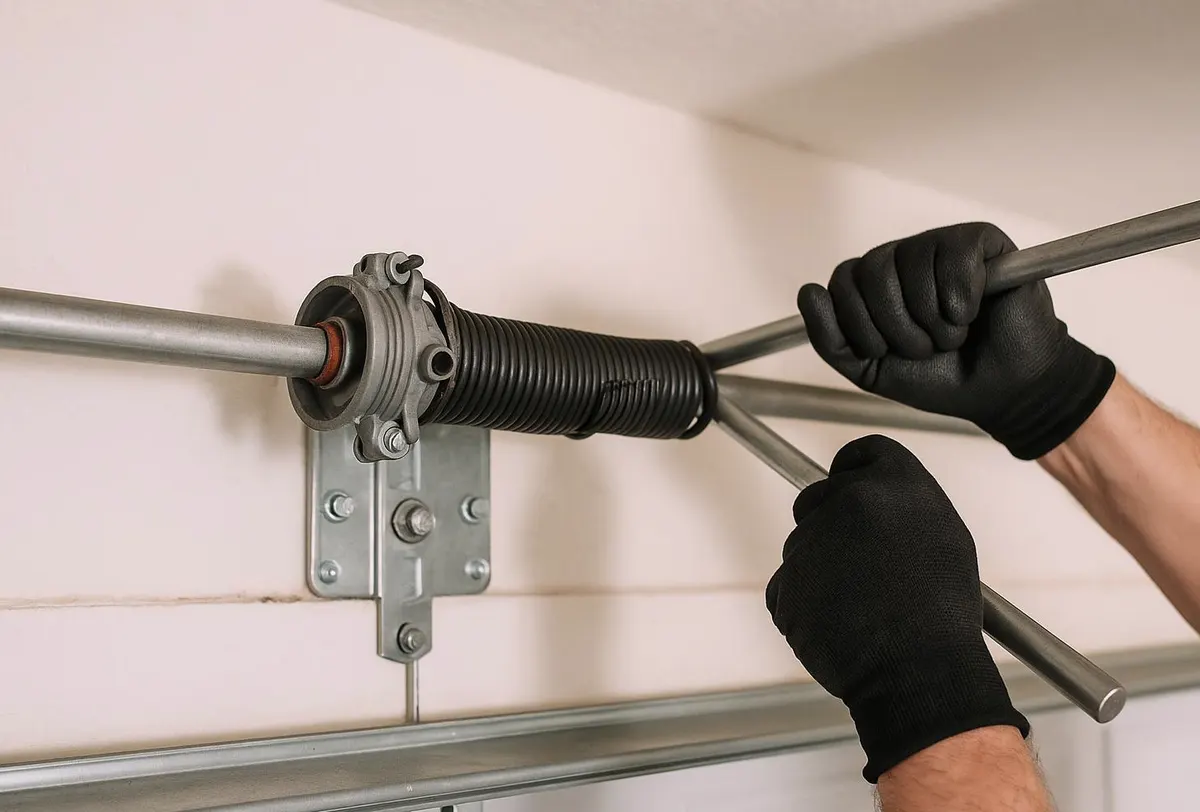
Steel contracts as it gets colder, and torsion springs that were balanced in October can feel noticeably stiffer or weaker by January. If the door feels heavy, drags, or won't stay partway open on its own, this is usually next on the list. Spring tension adjustment or spring replacement isn't a DIY job — these parts are under serious load and the wrong move can cause injury. A technician checks balance by disconnecting the opener and testing how the door holds position manually.
3. Tracks Out of Alignment or Packed With Debris
Older homes around Cumberland County often still have the original tracks, and decades of salt spray, road grime, and freeze-thaw cycling can leave them slightly bent or full of grit that turns to ice. A tech runs a level along the track, looks for gaps between the rollers and the rail, and clears or straightens as needed. Minor bends can sometimes be corrected on site; a track that's badly warped gets replaced.
4. Opener Settings and Internal Lubrication
Cold thickens grease. If the opener's gears were already due for lubrication, winter is when you'll feel it — the motor runs but struggles to transfer power smoothly. This is also when force and limit settings get checked, since a door that's heavier from stiff springs can trip the opener's safety reversal and make it look like the opener itself is broken.
5. Rollers and Hinges
Steel rollers and hinge pins rust faster here thanks to humid summers followed by salted winter roads tracked in on tires and boots. Rust adds friction, friction adds noise, and in freezing temps that friction can be enough to stall a door that's otherwise fine. Cleaning, lubricating, or swapping worn rollers is usually quick once you're already looking at everything above.
6. The Door Panel Itself
Original wood doors are still common on older houses in this area, and wood swells with moisture and contracts with cold and dry air. A panel that's slightly warped can bind against the frame only in certain temperatures, which is why a door that worked fine in October suddenly sticks in December. This is checked last because it's the least likely cause — but on an original door, it's worth ruling out.
When to Call Vineland Garage Door
If the door won't release from the ice without force, if it's stalling partway no matter what you try, or if you hear a spring-related twang or pop, stop operating it and call. We run Garage Door Maintenance visits that cover lubrication, track alignment, and balance checks before the worst of winter sets in, and we handle Spring Replacement when tension has dropped past the point of adjustment. If it's already stuck solid on a freezing morning and you need it working now, our Emergency Garage Door Service covers that too.
If your garage door is fighting you this winter, call Vineland Garage Door — we serve Vineland, Millville, Bridgeton, Hammonton, Buena, Newfield, Pittsgrove, and Elmer, and we can get a technician out before the next cold snap makes it worse.